Australia
The business trip that became a holiday
In December 2012, Melbourne came into my travel plans almost by accident.
I suddenly got an opportunity to travel there for an office seminar. The official part of the trip was only for two days, on 9 and 10 December. But once the work opportunity appeared, I decided not to come all the way to Australia for just two days. I extended the trip and turned the business visit into something much closer to a holiday.
I travelled from Dubai to Melbourne and stayed at The Crown. Satinder Singh and Rodrigo Garcia, colleagues from work, were also there initially, but they were not really my travel companions. We did some sightseeing together while we were all in Melbourne, and after they left for India and the US, I continued on my own.
That change was significant. What had started as an official trip suddenly became personal travel, and Melbourne became a place I could experience without the structure of work around it.
A temple of cricket
One of the first places I wanted to see was the Melbourne Cricket Ground.
For an Indian, describing the MCG simply as a stadium does not really do it justice. Cricket in India is almost a religion, and some cricket grounds have the feeling of temples. The MCG felt like one of those temples to me.
Satinder, Rodrigo and I took a guided tour of the ground. We were shown around different parts of the stadium, including the dressing rooms and practice areas, and we also got the opportunity to go down to the cricket ground itself.
There is something different about seeing a place you have known for years through television and photographs and then suddenly finding yourself physically inside it. The MCG was not just another tourist attraction for me. It was a place that already had meaning before I ever arrived in Melbourne, because of what cricket represents back home.
We travelled around Melbourne using local public transport, which made getting around surprisingly easy. The city was accessible in a way that allowed us to move between places without needing a car or complicated arrangements.
We also visited the Rod Laver Arena. It was interesting to see another major sporting venue in the same city, but the MCG remained the place that stayed with me most strongly.
Soon afterwards, Satinder and Rodrigo left. One went back to India and the other to the United States.
And just like that, the official part of my trip and the company that came with it were over.
When the business trip became a holiday
After my colleagues left, Melbourne felt different.
There was no longer a seminar to attend, colleagues to meet or an office schedule to follow. I was now travelling for myself. I had extended the trip precisely for this reason, and the remaining days felt like a holiday.
At the same time, I did miss Pragati. If this had been planned as a personal holiday from the beginning, she could have joined me. So although I was enjoying the freedom of having the time to explore Australia, there was also the feeling that this was a holiday that could have been shared.
I decided to take a sightseeing tour along the Great Ocean Road.
The Great Ocean Road
I booked a group sightseeing tour in a small minivan. It was a full-day trip from Melbourne towards the Twelve Apostles, with stops along the way.
The journey itself was as memorable as the destination.
The landscape kept changing as we travelled away from Melbourne. The Great Ocean Road offered long stretches of coastline, dramatic views and a sense of space that was very different from the city. It was the kind of journey where the road becomes part of the attraction rather than simply something connecting two places.
One of the stops was Maits Rest Rainforest Walk. What I remember most from the rainforest were the huge trees, the dense natural surroundings and the colourful parrots and other birds. After the urban environment of Melbourne, being surrounded by that kind of nature was a completely different experience.
The contrast was part of what made the day interesting: a modern city at one end, and then a long journey through forests and along a spectacular coastline.
The Twelve Apostles
Eventually we reached the Twelve Apostles.
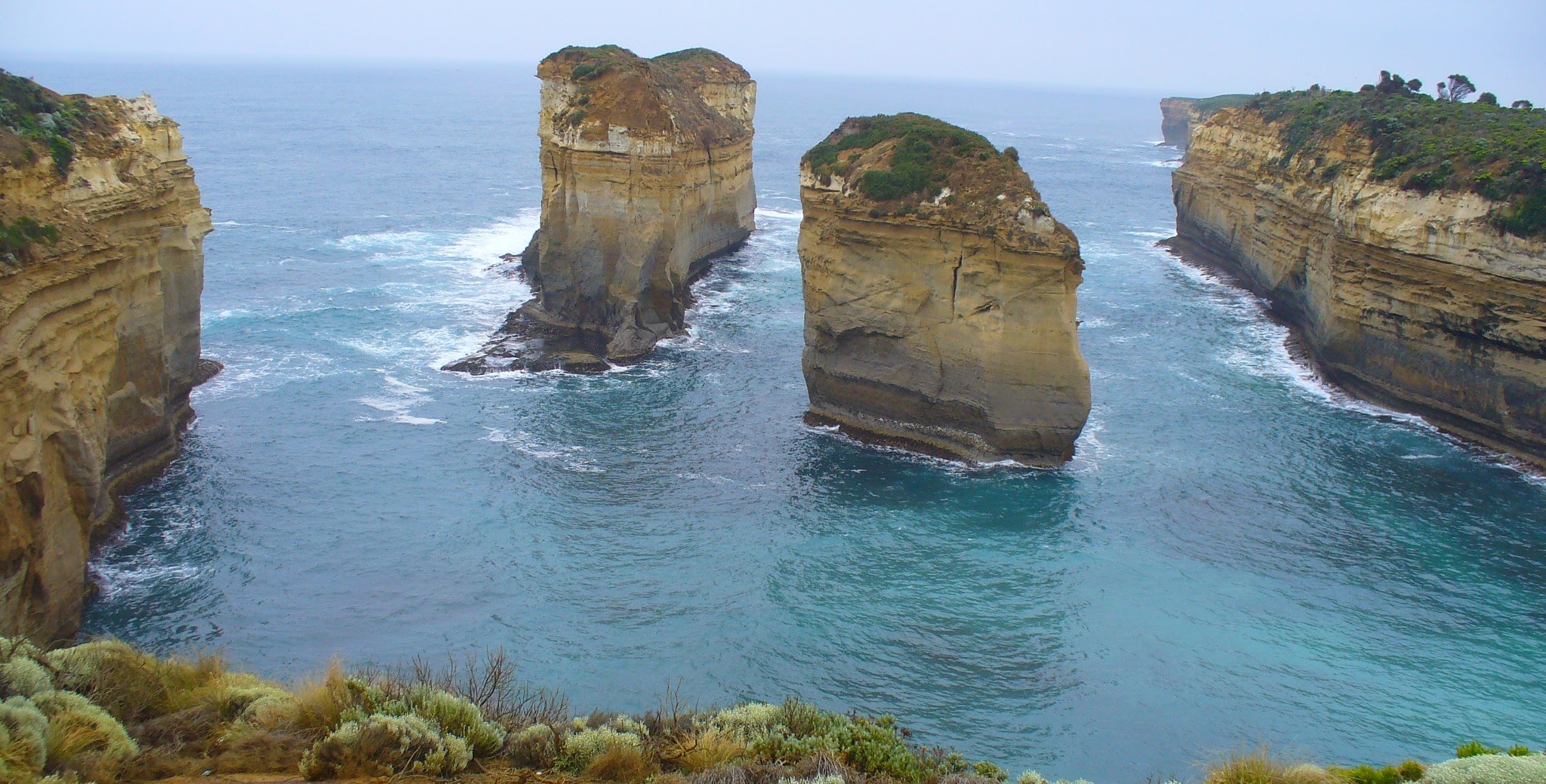
Seeing them in person was a multi-faceted experience. The first thing that struck me was the scale of these structures standing out in the ocean. They looked as though they had been placed there deliberately, but they were entirely natural formations, shaped over immense periods of time.
Then there was the ocean itself.
The wind in this part of Australia was remarkable. Standing on the southern coast and watching the waves and feeling the wind made it easy to understand that the landscape was not simply sitting there unchanged. Wind, waves and weather were still acting on the coast, just as they had done for countless generations.
That was perhaps the most interesting thought I carried away from the Twelve Apostles.
We tend to think of rocks and cliffs as permanent things. Human life is measured in years and decades, so something that has existed for thousands or millions of years feels almost eternal to us. But standing in front of the Twelve Apostles makes that idea difficult to hold on to.
These formations were created by the slow work of nature. The same forces that shaped the coastline were still working on it. Waves continued to strike the cliffs. Wind continued to move across the coast. Erosion continued, whether anyone standing there could see it happening or not.
What looked like monuments were actually temporary stages in a process that had been unfolding for an unimaginable length of time.
That is what makes geological landscapes so humbling. A human lifetime feels long when we are living it, but it is almost invisible against geological time. The Twelve Apostles made that contrast tangible for me. Nature does not need to hurry. It can spend enormous amounts of time sculpting a landscape, changing it grain by grain and wave by wave.
And eventually, even structures that appear immovable will change.
The Twelve Apostles were therefore more than beautiful rock formations to me. They were a reminder of scale — the scale of the ocean, the landscape, and especially the time over which the natural world operates.
Looking back
My Australia trip was never supposed to be a holiday.
It started with an office seminar that would have lasted only two days. I extended it because I had travelled so far and wanted to see something of Melbourne and the surrounding region. That simple decision changed the character of the journey completely.
With my colleagues, I experienced Melbourne through some of its most significant sporting landmarks, especially the MCG. After they left, I continued alone and took a day trip along the Great Ocean Road to the Twelve Apostles.
The trip gave me two very different kinds of memories. There was the excitement of standing inside the MCG, a place that carried enormous meaning for someone who had grown up with cricket in India. And there was the quiet perspective that came from standing on the southern Australian coast, watching waves and wind continue the work of shaping a landscape that had existed long before me and would continue changing long after I had gone.
I enjoyed those days after the official work was finished. It genuinely felt like a holiday.
But I also remember thinking that if Australia had been a personal trip from the beginning, Pragati would have been there with me.
Perhaps that is also part of what makes travel memorable. Sometimes a journey is carefully planned. Sometimes it appears because work sends you somewhere. And sometimes, if you are willing to extend the trip, an official journey quietly turns into an adventure of your own.