Amritsar
A sudden road trip
This was one of those journeys that happened almost without planning.
It was June 2007, just a short while after our marriage. Pragati and I decided to drive from Delhi to Amritsar in my Santro. There was no detailed itinerary, no hotel booked in advance and no real plan beyond getting to Amritsar and seeing what happened.
There was, however, one thing I was particular about.
Whenever I drive on a long road trip, I like to leave very early. And by early, I mean very early — around three or four in the morning.
The reason is simple: I would rather be on the road before the traffic wakes up.
So we left Delhi in the early hours and headed north.
At some point along the way, we had a flat tyre. It was an interruption, but not enough to change the plan. Once the tyre was fixed, we continued towards Amritsar.
We still had no idea where we would stay.
Finding a hotel
We reached Amritsar in the evening and started looking for somewhere to spend the night.
Eventually, we found a last-minute hotel near Sheranwala Gate. It was close enough to the Golden Temple for what we wanted to do, and since we had arrived without a reservation, finding a room at all felt like a small victory.
We parked the Santro at the hotel and decided to take a rickshaw towards the Golden Temple.
Cars weren’t allowed close to the temple, so the rickshaw was the easiest way to get there.
And then we saw it.
The Golden Temple
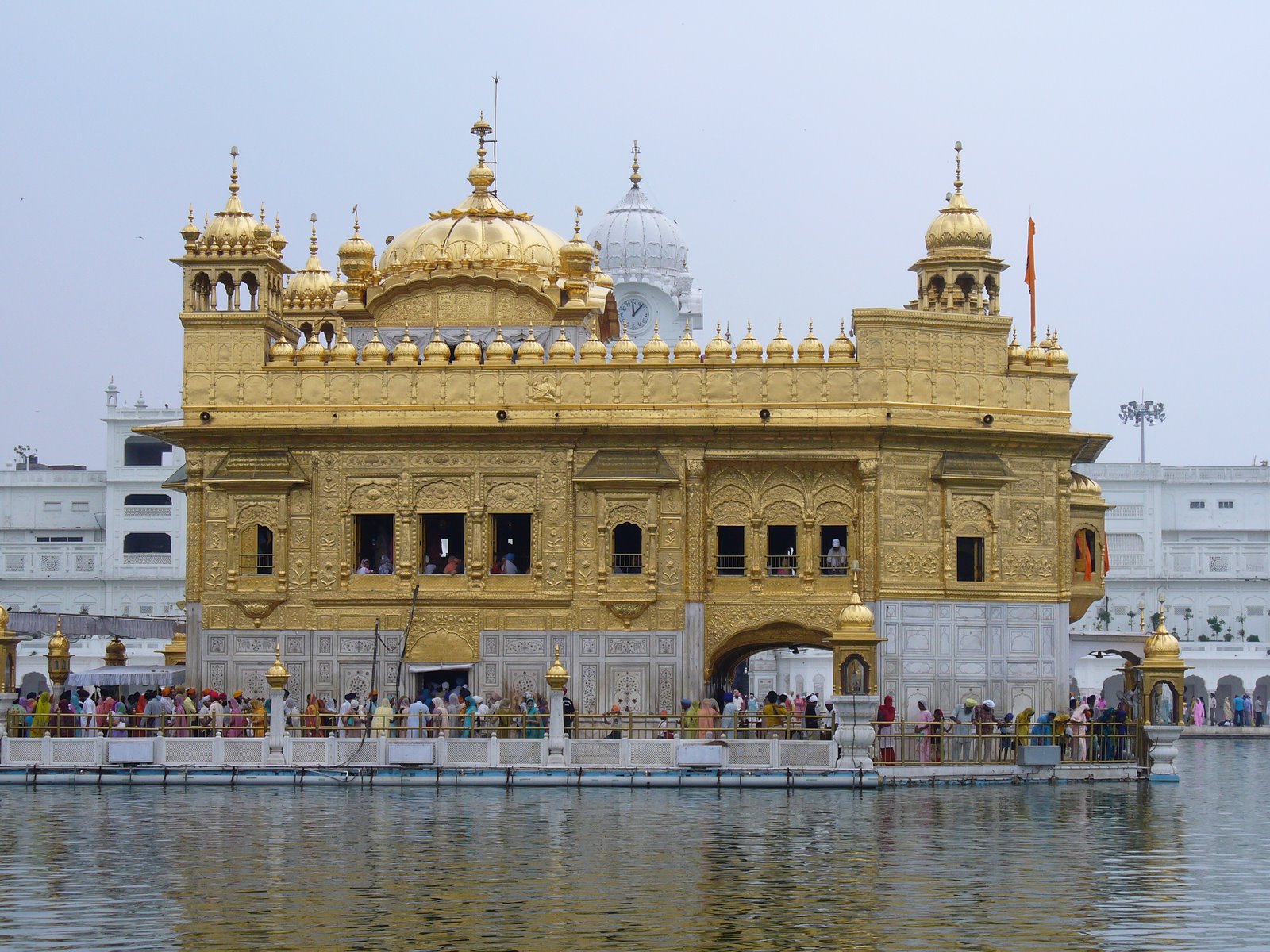
The Golden Temple, or Harmandir Sahib, is the spiritual centre of Sikhism and one of India’s most recognisable places of worship. The central shrine stands within the sacred sarovar, connected by a causeway, and the surrounding complex is designed around the water.
But knowing those facts doesn’t prepare you for the first sight of it.
The complex was remarkably clean, calm and well organised despite the number of people moving through it. There was a long queue for entry, but it moved quickly, so we didn’t have to wait very long.
What stayed with me most, though, was the view of the temple across the water.
The golden structure stood in the middle of the sarovar, and its reflection stretched across the surface of the water. It was one of those scenes that didn’t need any explanation.
After visiting the temple, we spent some time sitting beside the sarovar.
There was nowhere we needed to rush to.
For a while, we simply sat there and enjoyed the view.
The experience also made the idea of the Golden Temple as a place of welcome more tangible. It wasn’t just an architectural landmark we had come to photograph or see. It was a living place of worship, surrounded by people who had come for many different reasons.
Towards Wagah
The next day, we decided to go to the Wagah Border.
Wagah sits on the India–Pakistan border between Amritsar and Lahore. The daily Beating Retreat ceremony has become one of the best-known border spectacles in the region, with soldiers from the two sides carrying out highly choreographed drills before the flags are lowered. citeturn0search16
It was late June and the weather was humid. There were occasional showers, and between the rain and the humidity, our clothes were regularly drenched in either rain or sweat.
On the way, we made a quick stop at Attari Railway Station.
It was mainly a photography stop — a few photographs, a short pause and then onward towards Wagah.
The closer we got to the border, the more people we saw heading in the same direction.
We drove as far as the parking area allowed, then left the car and walked quite a distance towards the border. There were crowds everywhere, with groups of people making the same walk towards the ceremony.
Eventually we found a comfortable place to sit.
Then the programme began.
The Wagah ceremony
The atmosphere at Wagah was completely different from the quietness of the Golden Temple.
There were patriotic songs, a large crowd and an unmistakable sense of excitement. Everyone was waiting for the flag ceremony.
When the ceremony began, the soldiers marched with the distinctive, almost theatrical precision that has become associated with Wagah. The flags were brought down, the ceremony unfolded and the crowd responded with enthusiasm.
It was fun to watch.
But there was also a genuine feeling of pride in being there and witnessing the ceremony at the border.
After it was over, we made our way back to the hotel.
Jallianwala Bagh
The following day, we visited Jallianwala Bagh.
After the crowds and energy of Wagah, the atmosphere here felt completely different.
Jallianwala Bagh is inseparable from one of the darkest episodes of India’s freedom struggle. The massacre of 13 April 1919, when British troops fired on a gathering in the enclosed garden, left a deep mark on India’s history and became a symbol of colonial repression.
Walking through the site and remembering what happened there makes the place difficult to experience simply as another tourist attraction.
After Wagah, where the crowd had been loud and celebratory, Jallianwala Bagh felt almost deliberately quiet. That contrast stayed with me.
We spent some time there before returning once again to Harmandir Sahib.
By then, the Golden Temple had become the place we wanted to return to rather than simply another item on our sightseeing list.
We had now spent three nights in Amritsar, and the trip had gradually acquired a rhythm of its own.
The unexpected stop in Ludhiana
Our original plan was straightforward: drive from Amritsar directly back to Delhi.
The weather had other ideas.
Heavy rain started during the return journey, and the driving speed dropped considerably. It soon became clear that continuing all the way to Delhi that night wasn’t a sensible option.
So we changed the plan again.
We stopped in Ludhiana and found a hotel for the night.
Since Ludhiana is well known for its sweaters and jackets, the unplanned overnight stop also turned into an opportunity to do some shopping. We picked up some warm clothes before settling in for the night.
The next day, we continued towards Delhi.
And just like that, the completely unplanned road trip was over.
What I remember
Looking back, what I like most about this journey is how little of it was planned.
We left Delhi at three or four in the morning because that was how I liked to drive. We had a flat tyre. We arrived in Amritsar without a hotel. We parked the car and took a rickshaw to the Golden Temple. We went to Wagah, stopped at Attari, visited Jallianwala Bagh and then ended up spending an unexpected night in Ludhiana because of the rain.
The places themselves also gave the trip a remarkable range. The Golden Temple offered stillness and reflection. Wagah brought spectacle and patriotic energy. Jallianwala Bagh brought history and sadness. And the road home reminded us, once again, that the weather can rewrite an itinerary in minutes.
Nothing went exactly according to a plan because there really wasn’t one.
And perhaps that was the best part.
It was just Pragati and me, a Santro, a road heading north and the willingness to see where the journey took us.
Sometimes the trips that stay with you longest are the ones you never quite planned.