Spiritual Varanasi
Varanasi has stayed with me for a reason that is difficult to explain. I have been there twice, eight years apart, and the two journeys could hardly have been more different. The first was a photography trip with my mentor and a group of photographers. The second was with Pragati and was much more spiritual and personal. Yet both journeys brought me back to the same ghats, the same river and the same extraordinary energy of Varanasi.
November 2017 — Through a photographer’s eyes
In November 2017, I flew from Sharjah to Varanasi with a group of roughly fifteen photographers from the FSO (Friday Shoot Out) group in Dubai. The tour was organised by my mentor, Lal Nallath, with the intention of photographing Varanasi around Dev Deepawali.
Dev Deepawali is observed on Kartik Purnima, the full moon that follows Deepawali. The celebrations around Varanasi run for weeks, and the ghats become an extraordinary canvas of lamps, people and colour. For us, it was an opportunity to photograph the city and, more importantly, to learn from Lal.
We flew directly into Varanasi and then made our way towards the hotel. The last stretch was through narrow lanes that could not accommodate cars. With fifteen people and a lot of luggage, we had to use several cycle rickshaws, two or three people to a rickshaw, with the luggage distributed between them. The hotel itself was a small, decent place close enough to the ghats to walk.
Most of the trip was spent with cameras in hand. We visited the ghats for the Ganga Aarti and for the evening celebrations when the lamps illuminated the riverfront. We visited a traditional akhada, where wrestlers trained and fought, and spent time in a weavers’ colony photographing the craftsmen at work. We also visited Sarnath and its Buddhist temple.
One morning we planned to photograph the sunrise first and then go to the akhada. We were running late and rushed there in a few auto-rickshaws. In the excitement of getting there before the sunrise, I put my tripod in the back of the auto and completely forgot about it when I got down. By the time I realised, the auto was long gone. It remains one of those small, painful memories that become part of a trip’s story.
Although the journey was primarily about photography, Lal had encouraged me to experience Varanasi beyond the camera. I managed to find some time on my own to take a dip in the Ganges and visit the Kashi Vishwanath Temple.
This was before the Kashi Corridor was created. The approach to the temple was through incredibly narrow lanes, crowded with devotees. Even a two-wheeler would have struggled to get through. The temple entrance itself felt quite ordinary — in through one place, out through another — and after leaving my footwear behind, I actually found myself struggling to remember where I had entered.
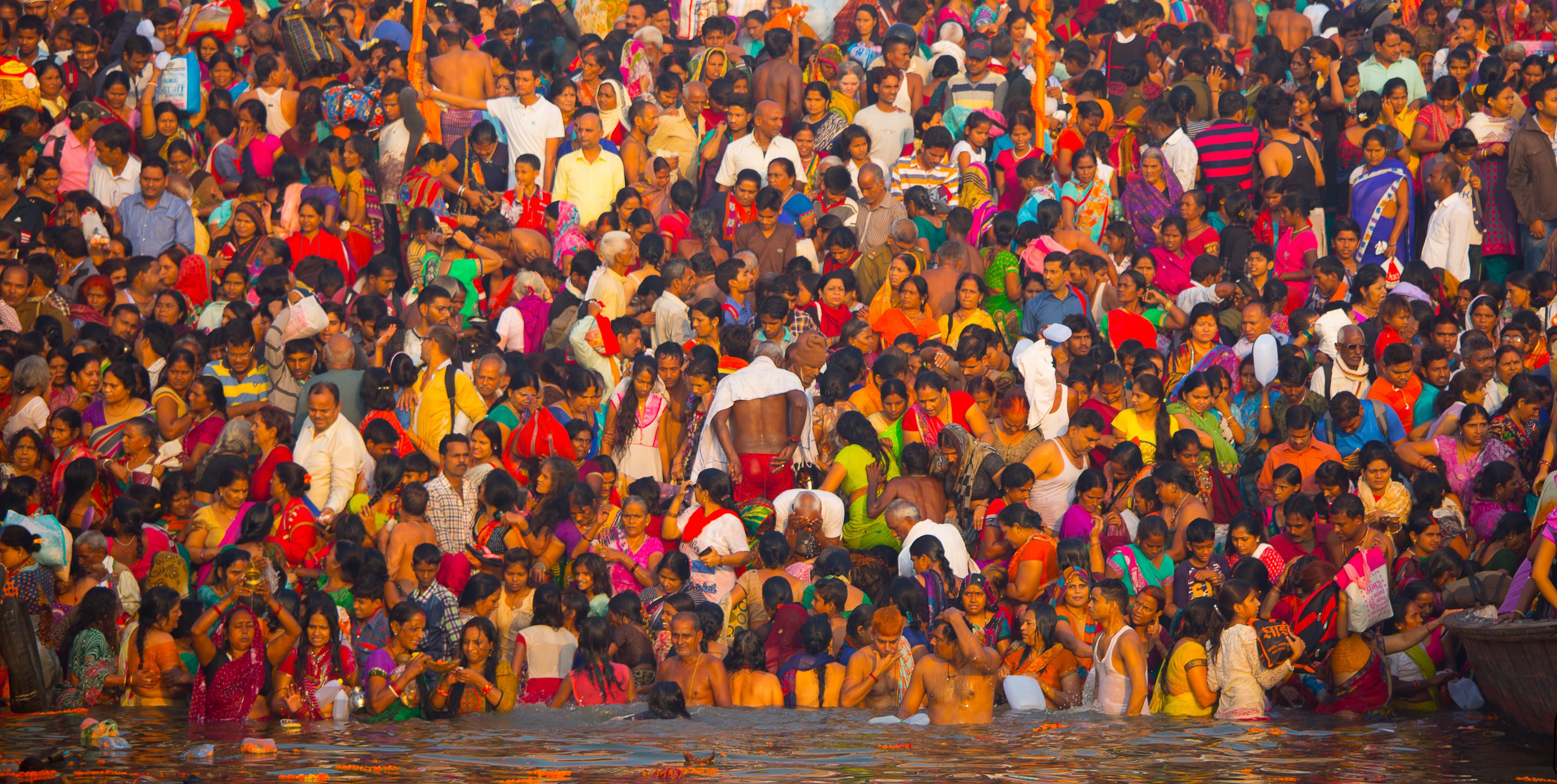
Of all the photographs I took on that trip, the candid images of pilgrims taking a dip in the Ganges remain among my favourites. There was something surreal about watching these moments unfold naturally, without anyone performing for the camera.
There was plenty of street food too, and between the food, the river, the lamps and the photography, the trip became an intense lesson in seeing. I had gone to Varanasi to learn photography. I came back with photographs, memories and a small glimpse of something much deeper.
November 2025 — Varanasi with Pragati
Eight years later, Varanasi happened almost by accident.
Pragati and I were in Agra visiting her father. We had originally considered taking a cab all the way to Varanasi, but that seemed too tiring. A newly started Vande Bharat service gave us another option, and we decided to take the train instead.
My experience from 2017 influenced one decision immediately: this time, we would stay as close to the ghats as possible. I wanted the river to be within easy reach, and being close to the Ganga Aarti and the temple would make everything easier.
We arrived in Varanasi in the evening and travelled towards the ghats by cab and rickshaw. The final stretch had to be walked with our luggage because the hotel was completely inaccessible to vehicles. I struggled with the luggage and only later realised that we could have called the hotel and someone would have come to carry it for us.
The hotel was Dwivedi Hotels Palace On Steps, right on the banks of the Ganges. Our Trishul room had a river view. The moment I saw the Ganges from the room, all the tiredness of the journey disappeared. This is something I have always loved when travelling — the feeling that the view from a room can make the entire effort of getting there worthwhile.
This visit covered many of the places I had seen in 2017, including the ghats, the Ganga Aarti and Sarnath, but the company changed the nature of the journey completely. This time I was with Pragati, and the trip felt much more spiritual than photographic.
Pragati had specifically told me not to miss taking a dip in the Ganges and visiting Kashi Vishwanath. So I did both. The Kashi Corridor was now in place, a dramatic change from what I remembered in 2017. We struggled to find the VIP entrance, but eventually managed to get the darshan.
And then there was Pragati’s Varanasi experience — shopping.
She discovered the Banaras handwoven dress materials and, quite literally, ran around like a kid in a toy store. Watching her excitement became one of the highlights of the trip. Varanasi was giving us two very different experiences: for me, the river and the temples; for her, the handlooms and the shopping; and for both of us, the atmosphere of the city.
We also moved to a second hotel for the last part of the stay. Saffron, near the main junction close to the temple, made the final leg convenient.
I was not in particularly good shape during this trip. Normally it is Pragati who tends to fall sick while travelling, but this time it was my turn. I developed a bad throat infection and flu-like symptoms during the last two days. I somehow continued with the sightseeing. Perhaps it was the environment, perhaps the dip in the Ganges, perhaps something I ate — I never figured out what caused it.
The return journey gave us another story that we are unlikely to forget.
On the day of departure, we were already late returning from Sarnath. We rushed back to the hotel, collected our luggage and took the auto-rickshaw arranged by the hotel towards the railway station. There was just one problem: nobody had clarified which railway station.
Varanasi has several railway stations, and by the time we reached ours, we realised we were at the wrong one. We had only about thirty minutes left before the train.
Seeing our troubled faces, an auto driver understood what had happened. He promised he could get us to the correct station in time — and then somehow did exactly that. It was one of those moments during travel when a complete stranger steps in, understands the urgency and simply gets on with helping you. We made it.
Two visits, one Varanasi
Looking back, the two trips feel almost like two different cities.
In 2017, I was looking through a camera. I was learning from Lal, chasing light, photographing pilgrims, wrestlers, weavers and the lamps along the ghats. The spiritual experience came almost incidentally, in the quiet moments when I stepped away from the group.
In 2025, I was travelling with Pragati. The camera was no longer the centre of the journey. The Ganges, the temple, the darshan and the simple act of being there mattered more. The city had changed too — most visibly in the Kashi Corridor — but the essential character of Varanasi felt remarkably familiar.
Perhaps that is what makes Varanasi special. You can return years later with a different person, a different purpose and a different life behind you, and somehow the river is still there waiting for you.